
But you don’t know what.
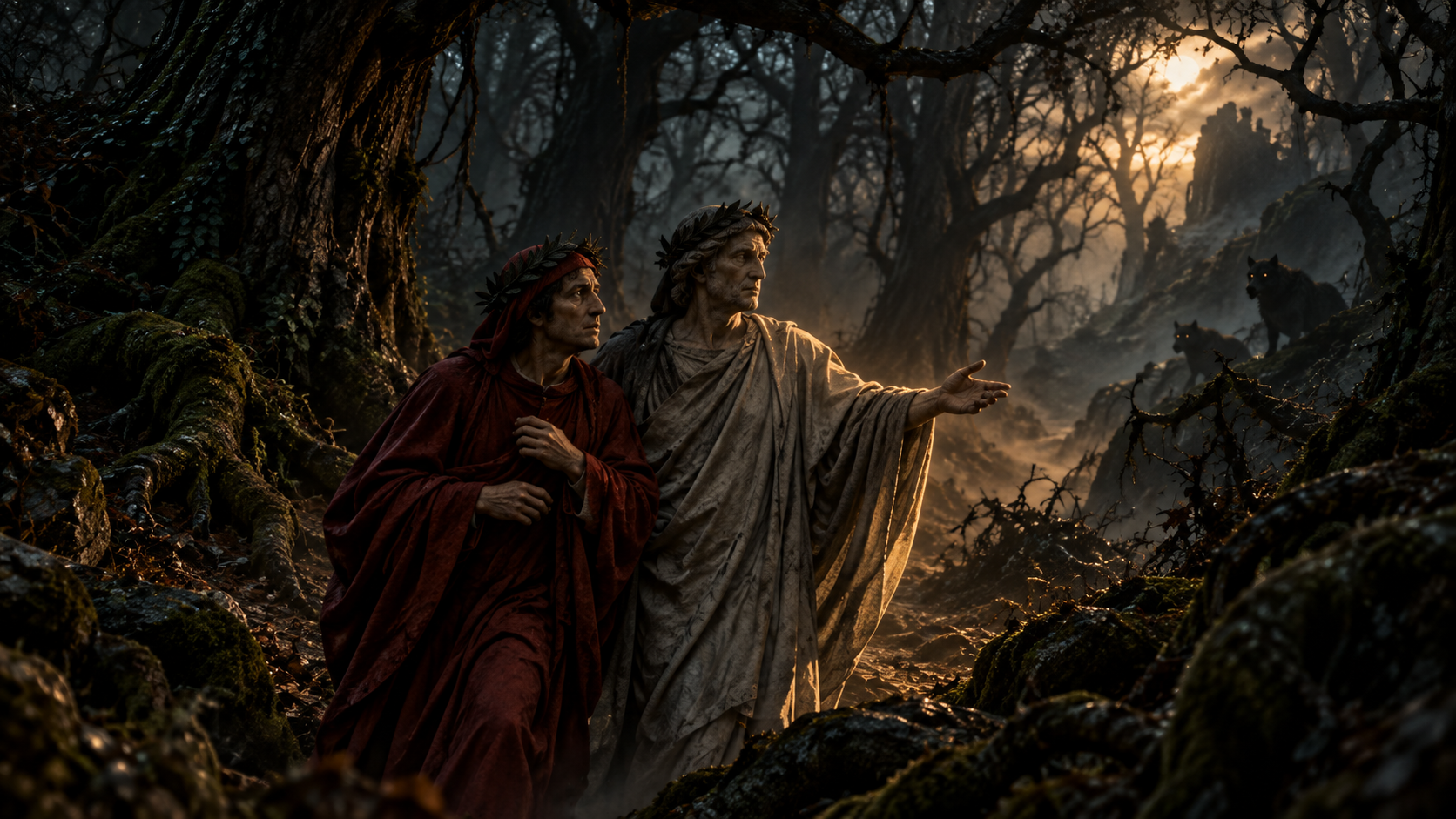
Dante knew this place well. He called it the dark wood.
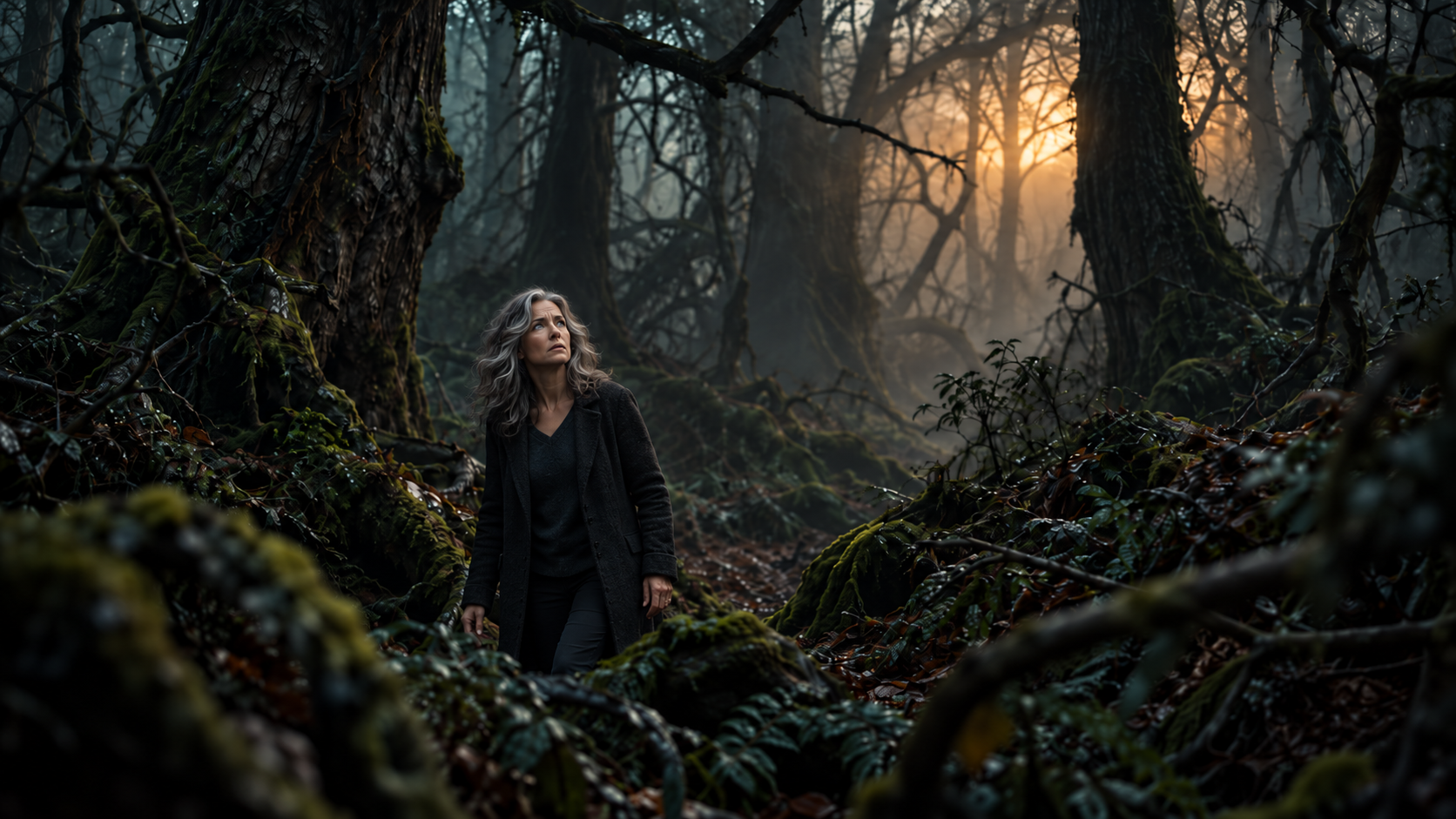
You can feel it before you can explain it.
Something about the life you’re living no longer fits quite the way it used to. Maybe nothing is dramatically wrong. You may still have the job, the relationship, the house, the routines, the responsibilities. From the outside, things may even look fine.
But inside, there is a growing sense that you cannot keep doing exactly what you’ve been doing.
The difficult part is that knowing something has to change is not the same as knowing what should replace it. The old direction has lost some of its meaning, but the new one has not yet appeared.
That strange in-between place can feel like failure or confusion.
Dante had another name for it.
He called it the dark wood.
If you’re skimming…
Feeling lost can be a sign that an old direction no longer fits—not that you’ve failed.
Dante’s dark wood begins before he knows the way out. The uncertainty is part of the story.
You do not need the whole answer yet. You need enough clarity to recognize what is no longer working.
The dark wood
Dante begins The Divine Comedy in one of the most recognizable emotional places in literature: lost.
He does not begin with a plan. He does not know the route forward. He cannot even fully explain how he arrived where he is.
He simply realizes that the clear path is gone.
That matters.
We often imagine change as a decision: you identify what is wrong, choose something better, and move toward it. But some of the most important changes in life begin earlier than that. They begin with disorientation.
The job that once gave you purpose feels strangely empty. The role you worked hard to earn begins to feel too small. A life that made sense at 35 may not make sense at 55. You may still love the people around you and appreciate much of what you have—and yet feel an unmistakable pull toward something you cannot name.
Dante’s forest captures that experience because it offers no immediate solution. Before there is a new road, there is the recognition that the old one has disappeared.
And that can be frightening.
When we do not know what comes next, our instinct is often to rush toward certainty. Make a plan. Pick a direction. Fix the discomfort.
But the dark wood suggests something different:
Not knowing may be part of knowing.
Sometimes confusion is the first honest evidence that we have stopped pretending the old answers still work.
Dante will eventually find a guide. He will move forward. But first he has to recognize where he actually is.
That is where change begins.
What the dark wood means now
Most of us will never wake up in a literal forest with no idea how we got there. But the emotional experience is familiar.
There are periods in life when the story that used to organize everything stops working.
You may have spent years building toward a particular version of adulthood—career, family, security, achievement, responsibility—and then discover that reaching it does not answer the questions you expected it to answer.
That does not automatically mean the life you built was wrong.
It may simply mean you have changed.
The danger is that we often interpret that change as a problem to eliminate instead of information to pay attention to. We assume discomfort means we should get back to normal as quickly as possible.
But what if “normal” is exactly what no longer fits?
The dark wood is uncomfortable because it strips away certainty. It forces us to notice the gap between the life we are living and the life we may now need.
That gap can feel empty.
It can also be useful.
Because before we can choose what comes next, we usually have to become honest about what has ended—even if nothing has officially ended yet.
That is why the question is not immediately:
What should I do next?
A better first question is:
What no longer feels true?

What change looks like now
Eventually, the dark wood stops being only a place of confusion.
It becomes a place of decision.
Not because you suddenly understand everything.
Not because all fear disappears.
But because you realize you cannot stay where you are.
Sometimes change looks dramatic from the outside.
A plane ticket. A resignation. A move. A goodbye.
More often, it begins in a quieter place: the moment you stop waiting to feel completely certain before you begin.
The woman in the dark wood was not lost because she had no options.
She was lost because she could not yet imagine herself stepping into a different life.
Now she can.
She does not have every answer.
She does not know exactly how the story ends.
But she is moving.
And that is what matters.
The way out of the dark wood is not perfect clarity.
It is the willingness to take the next true step before the whole path is visible.
PRACTICE
Name What No Longer Fits
When you’re in a dark wood, the temptation is to demand an answer: What am I supposed to do next?
Try asking a different question first.
Take ten quiet minutes and write without editing yourself:
What in my life no longer feels true—even if it still looks fine from the outside?
What am I continuing mostly because it is familiar, expected, or difficult to change?
What have I been quietly wanting more of lately?
Don’t turn your answers into a plan yet.
The goal is not to find the new path today. It is simply to become more honest about the path you may already be leaving.
Sometimes clarity begins not with knowing where you are going, but with finally admitting where you no longer belong.
A final thought
The dark wood is not the destination.
It is the place where the old map stops working.
That can feel frightening, especially when you are used to being capable, responsible, and certain of your direction. But not every season of life is meant to give you a clear answer immediately.
Sometimes the work is simply to notice what has changed, stay honest about what no longer fits, and resist the urge to force certainty before it arrives.
You do not need to see the whole road.
You only need enough light for the next step.
Not sure which crossroads you’re standing at?
The Crossroads Compass can help you identify the kind of challenge you may be facing now—Control, Choice, Courage, Release, or Renewal—and point you toward the Saga & Sage path that fits best.